

Summary: Home interior designs will help to renew the entire house using great ideas that are functional and fashionable. This blog highlights some simple tips on how to make your home more comfortable and stylish.
A Complete Guide to Home Interior Designs & Best Decoration
Interior Designs | Carpentry Works | Home Designs
An ideal house cannot be described solely by means of luxury furniture or fashionable decor. The best interior designs for homes consist of creating an area that is comfortable, functional, balanced, and individualized. From choosing the most suitable interior design to wall designs, furniture, flooring, lighting, and color combinations, everything counts when it comes to interior design.
No matter if you are designing your home from scratch, revamping your apartment, or making your villa more appealing, the right interior decisions can add to its functionality and charm.
A well-designed home interior is one that is a blend of good aesthetics, comfort, and functionality. To have a good design, one needs to first plan for the space and layout of the interior.
What Are Home Interior Designs?
Interior design of homes relates to the design of interiors in a house. It involves factors such as the design of the interior layout, the choice of furniture, the color scheme, lighting fixtures, flooring, walls, and other interior features.

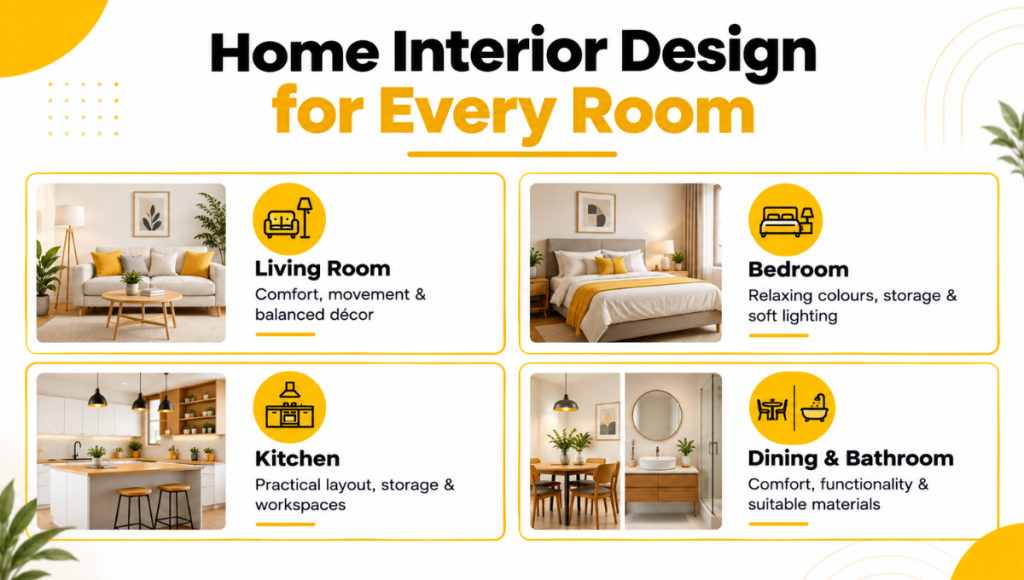
Interior design must consider the size and function of each space. The living room, for instance, might need comfortable seating and proper lighting, whereas the bedroom would need soothing colors, storage space, and soft lighting.
The goal is not simply to make a room attractive. The design should also make everyday life easier.
Why Is Interior Planning Important?
Interior planning allows you to plan for each of the functions of the different areas of your house before taking any further steps. If interior planning is not done, even an attractive room may appear congested and uncomfortable.
Good space planning can help you:
- Make better use of available space
- Choose furniture according to room size
- Create a practical interior layout
- Improve movement between different areas
- Select suitable lighting
- Coordinate colors and finishes
- Avoid unnecessary purchases
- Create a consistent style throughout the home
Planning will help in having a coordinated appearance rather than choosing individual products without thinking about their coordination.
How Do You Design Your Home Interior?
In order to design the interior of your house properly, you need to begin by identifying the function and the dimensions of the particular room. After that, you should develop the layout, the style of design, materials, and color scheme, and finally furnish the space.
1. Understand Your Space
Before you choose any furniture or decorations, you need to study your space. Pay attention to the size of the room, windows, doors, light, and other architectural details.
A smaller room will require smaller furniture and light decorations, while a larger room is capable of holding larger furniture and more decorative items.
2. Plan the Interior Layout
The interior layout will dictate how one will move through the room. The furniture must be arranged such that the room is spacious and easy to navigate.
For instance, ensure that bulky items are not positioned directly on traffic routes. There should be adequate space surrounding seats, tables, beds, and storage units.
3. Choose a Design Style
The interior decoration of your house must be an extension of your taste, but at the same time functional. You may go for the modern, minimalistic, contemporary, classic, or any combination of styles.
It all boils down to consistency. The colors, furniture, walls, floors, and lighting must harmonize with each other and not create disjointed spaces.
What Are the Main Elements of Home Interior Designs?
There are several components that make up an interior space. Some of the important components include furniture, walls, floors, lighting, colors, space planning, and décor.

Furniture Designs
It is important for the furniture to have a function and a look. Suitable furniture is supposed to occupy the available space without overcrowding it.
When selecting furniture, consider:
- Room dimensions
- Comfort
- Function
- Material
- Color
- Maintenance
- Overall design style
It might seem beautiful on display, but it may not fit into your small living room. The choice of furniture must always be made keeping in mind the available space.
Wall Designs
Walls offer a great chance of giving a room some character. Things like paint, textural effects on walls, wall decorations, or even just a feature wall can completely transform the appearance of an interior space.
A feature wall is helpful in cases where you want to focus on something but don’t want to decorate all walls.
Interior Paint
The color may affect the look of a room. The use of light colors can assist in making a room appear spacious, while dark colors bring about contrast.
Instead of choosing your wall colors one by one, think about how the wall colors will go together with your furniture, flooring, curtains, and other decorations.
Lighting Design
Interior lighting design is a critical component of interior design due to its impact on functionality and ambiance.
A well-planned lighting setup can include:
- General lighting
- Task lighting
- Accent lighting
- Decorative lighting
- Natural light
Rooms may vary when it comes to their need for light. There are areas that require practical light, such as the kitchen, whereas the bedroom needs more soothing light.
Flooring Designs
The floor is a very wide surface area; hence, the selection of the flooring can have a great impact on how the room looks.
Think about the wear resistance, maintenance, function of the space, colors, textures, and how the flooring fits into the other interior design elements.
Home Decor
Interior decoration enhances the character of an already-finished space. Furniture items like cushions, carpets, pictures, mirrors, plants, curtains, cabinet ornaments, and many others help make the space seem more complete.
But decoration must complement the total design concept and not be an unnecessary distraction.
How Do You Choose the Right Furniture?
Select the furniture based on the dimensions and the overall look of the room. Ensure that you measure the available space before buying any big items to ensure that there is ample space for maneuvering.
In the case of a living room, we should concentrate on seats, tables, places to store things, and movement. In a bedroom, we have to pay attention to beds, wardrobes, side tables, and available movement.
Furniture is not just supposed to be aesthetically pleasing. It needs to be functional and comfortable as well.
How Does Lighting Improve Home Interiors?
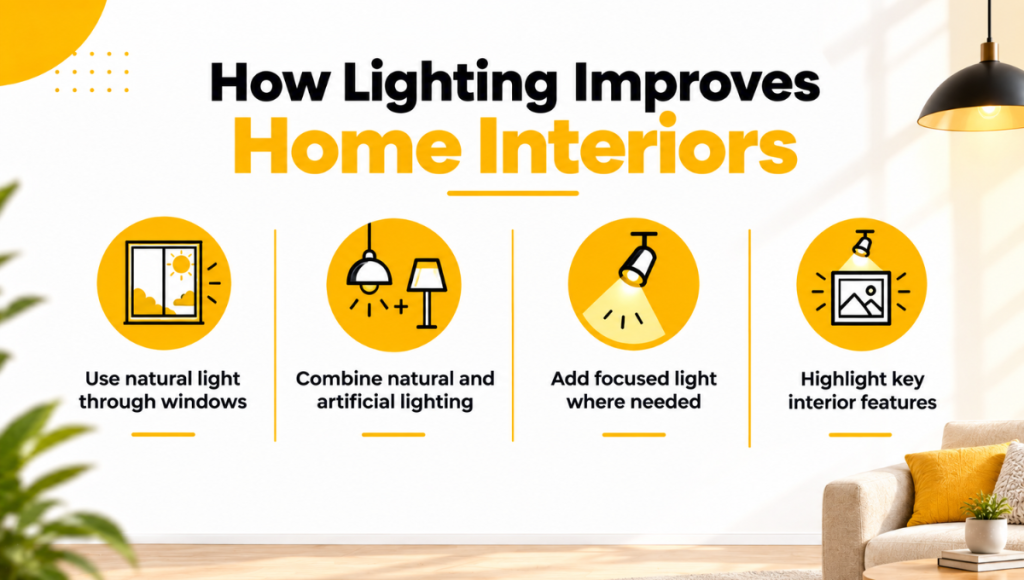
Lighting can emphasize significant design elements and make the space more comfortable to work in. A mixture of natural and artificial lighting usually results in greater flexibility compared to using only one type of light source.
Natural Lighting
Take advantage of the natural light that enters through windows and other openings. Do not needlessly cover them up with furniture and draperies.
Artificial Lighting
The artificial lighting could be designed based on the purpose of each room. Ceiling lights could serve for overall lighting purposes, whereas wall lights, pendant lights, lamps, or accent lighting could offer focused light sources.
What Should You Consider Before Choosing Flooring?
Prior to selecting any flooring material, one should take into consideration the purpose of the room and its maintenance.
Important factors include:
- Durability
- Cleaning requirements
- Moisture exposure
- Room traffic
- Appearance
- Comfort
- Compatibility with furniture and walls
For example, flooring requirements for a busy living area may differ from those of a bedroom or other private space.
Apartment Interior Design Ideas
The design of the interior of an apartment usually needs to be planned because space is limited. The main thing to achieve is to make the place seem spacious yet functional.
Utilize furnishings that will suit the room as opposed to having large pieces of furniture. The room should have a functional layout without any extra decoration.
Mirrors, proper lighting, matching colors, and good arrangement of furniture may also assist in achieving balance in the apartment interior.
Villa Interior Design Ideas
The villa interior design usually offers greater flexibility since there are larger rooms and spaces available for design. Nonetheless, large spaces still need proper planning.
Furniture should have proper proportions to the room, but it is the lighting and decoration that can make the focal points.
Using a uniform style for all living rooms, bedrooms, dining rooms, etc., may result in coherence within the whole house.
What Are Common Home Interior Design Mistakes?
Interior design, even though aesthetically pleasing, can be ineffective without proper planning.

Choosing Furniture Without Measuring
Purchasing furniture without ensuring the room size is appropriate may lead to overcrowded spaces.
Using Too Many Colors
Too much use of unrelated colors makes interiors appear visually chaotic. A well-coordinated color scheme typically makes the interior look organized.
Ignoring Lighting
There can be great-looking furniture and great finishes in a room, but there will be an atmosphere of discomfort if there is poor lighting.
Overdecorating
Too many accessories may make key design elements less noticeable. Accessories are supposed to add to the décor rather than take it over.
Forgetting Functionality
Interior design must be based on the practicality of its use. An attractive design that cannot be used will soon lose its usefulness.
How Can You Create a Balanced Home Interior?
Interior design need not entail all items having an identical design. Rather, different components should come together by virtue of matching colors, materials, dimensions, and design features.
You can create better balance by:
- Choosing a clear design direction
- Keeping a coordinated color palette
- Selecting furniture according to room size
- Using lighting strategically
- Combining different textures carefully
- Leaving enough open space
- Adding decoration selectively
The result should feel connected without becoming repetitive.
Home Interior Designs for Different Rooms
Since each room has a particular function, the design of the room needs to be based on its actual use.
Living Room
Consider the comfort of the seats, mobility, adequate lighting, and focal points. A proper blend of furniture, wall designs, carpets, and other decorations can form a warm atmosphere.
Bedroom
Bedrooms should focus on comfort and relaxation. Select appropriate furniture, color schemes, storage space, and lighting for the same.
Kitchen
Effective space planning is necessary for a kitchen. The storage, work spaces, lighting, flooring, and materials need to facilitate the activities in the kitchen.
Dining Area
Comfortable seating and enough room for seating at the table should be available in the dining area. Lighting could also be used to distinguish the dining area visually.
Bathroom
Materials used for bathrooms should be suitable for moisture and cleaning purposes. The element of practicality is as important as aesthetics.
How Can You Improve Your Home Interior on a Budget?
Renovation is not always the best way to give your home a new look. It can be done with a few well-chosen renovations.
Consider updating:
- Wall paint
- Lighting fixtures
- Curtains
- Rugs
- Cushions
- Decorative accessories
- Mirrors
- Furniture arrangement
Rearranging existing furniture can also improve the interior layout without requiring major spending.
When Should You Consider Home Interior Design Services?
Home interior design services provided by professionals may prove helpful if you find yourself in need of assistance with planning, arrangement, materials, furnishing, lighting, or general design.
In certain cases, taking a professional approach may prove advantageous because of the complexity of projects that involve many decisions that should be compatible with each other.
Home Interior Design in Dubai
For homeowners seeking home interior design in Dubai, there is no difference as far as the basic rules go — space analysis, layout planning, material selection, and designing accordingly.
The final product should be designed based on the property’s size, lifestyle needs, functional considerations, and personal preference, not just on trends regardless of practicality.
Ayeshtech: Creating Better Home Interior Designs
Home interior design should be able to combine elements of beauty, comfort, and utility. The goal of Ayeshtech is to ensure that homes have interior designs which would help make them more comfortable and beautiful spaces. This includes such things as designing the layout of rooms, designing wall decorations, designing the flooring, and so forth.
When it comes to designing or redesigning your home, Ayeshtech is here to bring the right concepts and ideas that complement your home. Learn more about us and how we turn your vision into a space that feels truly yours.
Conclusion
For interior design ideas that are stunning, you must first get to know your space and what you want from it. There are many elements of interior design, including furniture, wall designs, interior colors, lighting, floors, and decor.
Regardless of whether you need to renovate an apartment, a villa, or just a room, make sure to consider factors like comfort, practicality, harmony, and your personal style. To learn more about interior design ideas, visit the blog.
Contact us when you are ready to discuss your project for interior design.
FAQs
What is the most important part of home interior design?
Space planning is perhaps the most significant component, as it plays a key role in determining how well a space can be used.
How can I make my home interior look better?
Begin with a practical design scheme, proper colors, lighting, furniture, and interior decoration that fit in with your design.
Should I hire professional home interior design services?
However, professional services will prove useful for large or complex projects that require coordination of the layout, materials, furniture, lighting, and other design features.
