
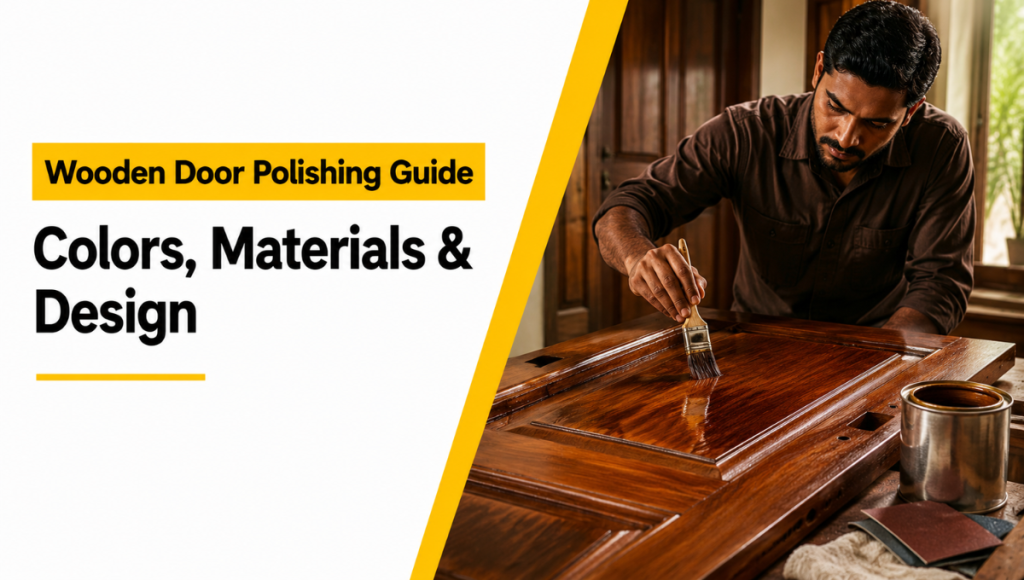
Summary: The six-step polishing procedure, common finishes (natural, dark veneer, glossy, matte, and satin), and how to select colors that complement your interior are all covered in this comprehensive guide on wooden door polishing. The best materials (melamine, PU, varnish, and stain), sanding fundamentals, refinishing versus repair, entry door concepts, pricing considerations, and maintenance advice for maintaining polished doors’ best appearance over time are all covered.
Door Polishing Guide: Colors, Materials & Finishing Ideas
Furniture Polish | Wood Varnish | Door Paint Colors
Wooden doors are more than structural components; they add warmth, personality, texture, and natural ambience to a space. However, no wooden surface can prevent a door from losing its original charm as it ages naturally. The five common causes include frequent opening and closing, dust buildup, accidental scratches, exposure to moisture, and normal wear and tear.
What Is Door Polishing?

Professional door polishing is a series of pre-treatment and paint construction steps carried out to improve a wooden door’s appearance and maintain its long-term usable condition. It is never as simple as applying a single layer of polish to the original surface. The process completes six core steps, in order:
- Basic cleaning
- Surface sanding
- Repair of existing damage
- Staining
- Polishing
- Applying a protective coating
Before the process of constructing the door, there should be an inspection of the door’s damaged condition. If there are scratches, old paint, damaged paint, stains, or a rough surface on the door, there must be a pre-treatment of the area where there will be painting.
What are the Benefits of a Wooden Door Polish?
Frequent use naturally wears down a door and dulls its lustre over time. Professional polishing brings a range of tangible benefits:
- Restores the appearance of old wooden doors and endows the wood with a more natural grain and texture
- Brightens and repairs old finishes that have become dull and faded
- Repels dust and strips off adhered stains
- Inhibits further wood degradation caused by daily use
- Offers the option to change the finish’s color and style
- Enhances the overall visual effect of an interior space
- Extends the service life of existing wooden doors
- Helps wooden doors match other interior woodwork
- Keeps the finish smoother and cleaner overall
Even though the construction of the door is completely intact, it is still a weak link within the whole interior design because of the dullness of its appearance or its outdated style.
Finding the Right Finish for Your Door

Choice of finishes should be based on the interior design style, wood type, door category, and personal preference.
Natural Wood Finish
This method retains all the natural features of the wood in question, not concealing the substrate. It helps to emphasise the natural appearance of the material and matches other wooden elements used inside a room, such as wardrobes, floors, and furniture; therefore, this finish.
Dark Wood Veneer
The door’s rich wood veneer, which gives it an expensive appearance, can be constructed of natural materials like mahogany and walnut or in dark brown hues. It is ideal for rooms with dark floors and furniture, a luxurious villa, an office, and a traditional interior design.
Light Wood Coating
Natural wood, oak, honey, and beige are examples of light tones that enhance a room’s visual spaciousness and brighten indoor lighting. It goes well with modern soft furniture, minimalist furniture, and neutral walls.
Shiny Coating
Doors with a glossy surface appear smooth and glossy, but they can also have a polished finish if applied properly. Glossy coatings, however, bring emphasis to any glitter on the door surface; therefore, sanding and base preparation are necessary before application.
Matte Paint Finishes
Matte coatings create a contemporary look that is muted and soft because of their ability to absorb light. A matte finish is the best choice when the interior design emphasises the wood’s inherent beauty above its reflectivity.
Satin Paint Finishes
Satin finishes, which lie between matte and glossy finishes, produce some reflection without being unduly glossy.
How to Choose the Right Door Polish Color
Choosing the right color of a door is a very important task of decorating a room. choosing a door color cannot be done in isolation. The design needs to complement every aspect of the room, including the walls, flooring, and furniture. It is also important to consider how natural and artificial light will affect the appearance of the door shade.. Rich and dark tones of the door suit traditional homes while light tones are best in modern homes.
Color of Wall
Dark wood doors look good with light wall colors, whereas light-coloured doors are a variety of neutral colour schemes.
Floor
The colour of the door and the floor don’t have to match, but they should go well together.
Furniture
A room appears well-coordinated when the colours of the tables, chairs, cupboards, wardrobes, etc. match.
Lighting
The polish’s look is affected by both artificial and natural illumination. An attractive colour palette at the showroom may look completely different at home or in the workplace.
Indoor Style
Rich wood-tone finishes work very well with traditionally styled spaces, while light, natural matte finishes with minimalist textures perform best in modern homes.
What Is the Best Polishing Material for Doors?
Choice of material depends on the type of wood used, the visual effect that should be achieved, durability, and place of installation of the door. The materials most often used include melamine, PU, varnish, and wood stain.
Melamine Polish
Mostly used on wooden interiors and furniture, providing a very smooth and good-looking surface when done properly. There are many types, and it can be used on doors, cabinets, wardrobes, and furniture requiring a refined look.
PU Polish
Polyurethane can be found in various glosses and provides an elegant, durable, modern finish. The quality does not only depend on the type of polyurethane but also on proper mixing and application.
Wood Stain
Wood staining works best in cases where one wants to transform the appearance of the door but still needs the texture of the wood to be seen – for example, changing the colour of a light-coloured door to dark walnut brown. It is mainly used to alter the appearance of the wood but not to hide its texture.
Varnish
Varnish is a clear protective finish that provides protection while beautifying the surface of the wood at the same time. Wood varnishes come in different finishes such as high gloss, satin, or natural texture.
Wood Sanding: The Critical First Step
Sanding is perhaps the most crucial stage in any door refurbishment, and it comes before polishing. The initial coating determines if it is required. Its role is to remove old coating, scratches, and other surface defects, preparing the wood for new coating.
Proper sanding can:
- Remove old paint layers or finishes
- Smooth out rough areas
- Reduce the visibility of noticeable scratches
- Clean and prep the wood for staining
- Improve the adhesion of the new finish
- Create a smoother paint surface
Sanding should be done carefully since too much sanding could damage the wood or its ornamental features or even alter the design of the door. To get ready for finishing, the door should be cleaned of dust after the sanding procedure is finished.
Door Refinishing: When Is It Necessary?
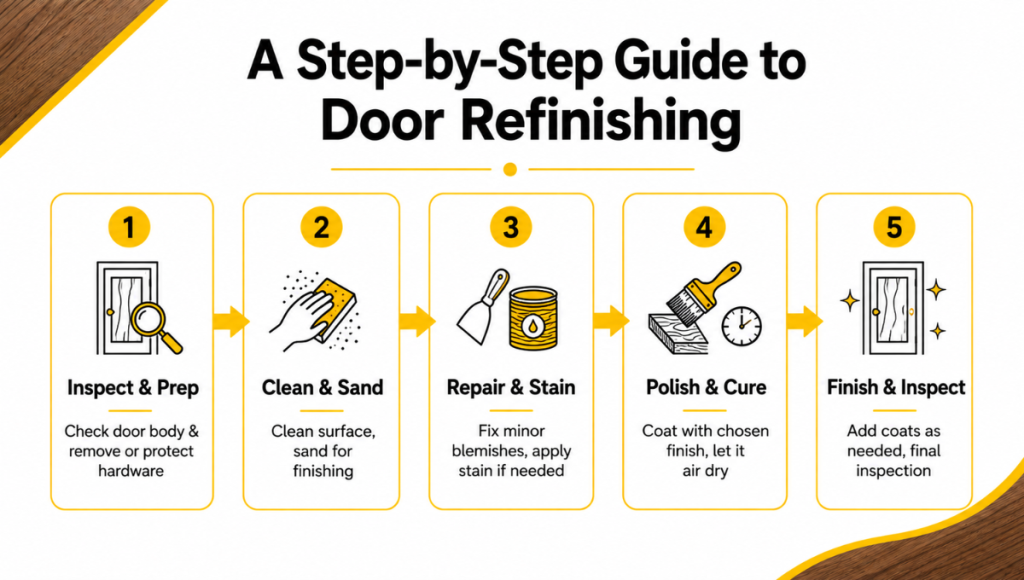
For doors that are structurally sound but have fading paint, scratches, damage, or an antiquated appearance, refinishing is typically the best option. A typical refurbishing procedure could consist of:
- Inspect the door body
- Remove or protect hardware
- Clean the surface
- Sand for finishing
- Repair minor blemishes
- Apply wood stain if necessary
- Coat the selected polish onto the door body
- Leave the surface exposed to air-dry while the paint cures
- Add additional coats as needed
- Carry out a final inspection of the finished surface
All of these steps are adjusted flexibly based on the door’s original condition and the chosen finish style.
Wood Door Repair vs. Wood Door Restoration
Repair and refinishing are often confused, but they’re distinct. Refinishing only improves the surface — sanding, staining, polishing, extra coats. Repair is more complex: fixing damaged wood, reinforcing loose mortise-and-tenon joints, replacing failed parts, and addressing structural issues, all before refinishing can begin.
For example, an old door with cracked paint, scratched edges, and loose joints can’t be fixed with fresh paint alone — repair must happen first. An experienced carpenter is able to determine whether the door needs polishing, refacing, repair, or restoration. AyeshTech offers all these services: repair, refacing, restoration, interior door carpentry, and furniture carpentry.
Ideas for Main Door Finishing
Refinishing is usually the best choice for doors that are structurally solid but have fading paint, scratches, damage, or an outdated appearance.
- Traditional homes — dark brown walnut wood or dark wood veneer for a steady, classic texture
- Modern residences — natural-toned light matte or semi-gloss finishes
- Light-luxury homes — dark or high-gloss doors that echo other high-end finishes such as custom furniture, wall panels, wardrobes, and flooring
The design of the door leading into the house must never deviate from the general design of the house, lest it clash with the other aspects. It is important to take off all the hardware before polishing; else, you run the risk of messing up the polish. A scratched or unsuitable handle can ruin a good renovation job.
What Affects Polishing Cost?

There’s no fixed standard for door polishing costs, since pre-work, materials, and resources vary from door to door.
Polishing Cost: Key Factors to Consider
- Door size — larger doors consume more materials and labor hours than small ones
- Number of doors — polishing a single door differs significantly from renovating multiple doors across a villa, apartment complex, office building, or commercial structure
- Initial condition — a door needing only light sanding takes far less time than one with old paint, deep scratches, stains, or damage
- Type of polishing agent — melamine, PU, varnish, and specialty finishes each have distinct material and labor requirements
- Door design — carved, paneled, decorative, or highly detailed doors need special pre-treatment and more precise work
- Repairs — if carpentry repairs are needed before polishing, overall cost rises
- Number of coating layers — some finishes require multiple layers to reach the desired appearance and durability
The most reliable way to estimate cost is an on-site assessment of the door’s actual condition, size, material, and finish requirements.
Where Door Polish Can Be Applied
Wooden doors are a feature that you can find in every type of space. That is why door polishing is used in many different ways. Polishing doors does more than just make them look nice. In homes, villas, and apartments, door polishing is important because it makes sure the doors go well with the furniture, wardrobes, cabinets and even the floors. This makes the inside of the space look nice and well put together rather than having different wood colors everywhere.
In offices having a polish on all the doors helps to create a clean and professional look for employees and visitors. In stores and showrooms, polished doors help to create a welcoming atmosphere for customers. Hotels use door polishing a lot, from the doors in the lobby to the doors in the guest rooms, to keep a welcoming atmosphere that visitors expect. This also helps to protect the doors from getting worn out from being used a lot.
Other businesses, like restaurants and clinics, also rely on polishing to keep their doors looking clean and well taken care of, which makes their company look good. In all these situations, getting your doors polished by experts like AyeshTech makes the wood look nice and natural and also protects it from getting worn out every day from moisture and sunshine. This makes sure the doors look great for a long time.
How to Maintain a Polished Wooden Door
Everyday self-maintenance can go a long way:
- Dust regularly with a soft cloth
- Avoid hard materials that could scratch the paint layer
- Don’t soak the door excessively in water
- Avoid using harsh cleaners or ones that aren’t suitable for the finish.
- To avoid accelerated aging, keep an eye out for early warning indicators like small scratches or fading and take quick action.
Melamine, polyurethane, and varnish coatings all have varied care needs; thus maintenance techniques should also be modified according to the kind of coating.
Professional sanding and polishing services offer a complete service that covers every stage of the process, including pretreatment, sanding, selecting the materials, matching colors, construction, drying, and acceptance, if self-maintenance is unable to resolve the problem.
A team of professionals starts by examining the door on-site and selecting an appropriate finish according to the properties of the wood. This option is ideal for work that requires a coherent appearance of several pieces of woodwork, for example, for villas, commercial places, and offices. AyeshTech considers door finishing a part of the interior design, not a separate one.
Why Choose AyeshTech for Door Polishing

In case of door polishing, experience along with attention to detail is crucial. This may be a simple touch-up, but it might also turn out to be a long-lasting finish. AyeshTech provides a professional approach to the issue by starting with inspecting the condition of the door on site. They then sand it down, address any issues, paint and apply a protective layer according to the kind of wood used. Understanding door polishing not merely as one of those small jobs, Ayesh Technical Services considers it to be an important part of the overall appearance of the interior of the house, making sure that each door is properly coordinated with the wardrobes, furniture, cabinets and the floor in general.
Why Our Team is Unique:
- Inspection on site before any work
- Finishing experience in melamine, PU, varnish and stain finishing
- Design-oriented approach to coordinating doors with furniture and flooring
- Various services – repairs, refacing and restoration
- Flexibility to provide one door or entire villa solution
Conclusion
Polished doors made of quality wood give new life to the interiors of one’s house. The possible outcomes include three colors – natural wood, dark walnut, and light wood as well as three types of shine – gloss, matte, and satin. Four crucial elements shape these outcomes: color, the type and condition of the wood, previous work done on it, and the craftsmanship of the people carrying out the work.
When choosing a polishing material, consider four key factors: the type and condition of the wood, the interior style, color compatibility, and durability.
Before polishing an older door, four steps typically need to happen in sequence: sanding, staining, applying clear varnish, and carrying out any necessary repairs. For new doors, a matching decorative finish not only protects the door’s appearance but also unifies its style with other custom wooden elements — furniture, wardrobes, kitchen cabinets, tables and chairs, and flooring. With the right craftsmanship, a polished wooden door can keep its good looks for years to come. Contact Us today to refurnish your furniture and give it a brand-new look.
FAQs
Can an old or damaged door be polished, or does it need repair first?
Where the door is affected by structural defects such as damaged wood, loose joints, or any other damage, repairs have to be carried out before the process of polishing. Polishing will only correct surface defects.
Which polish finish is best — matte, glossy, or satin?
No one finish can be considered the best finish; it all depends on your taste in interiors. Matte is great for contemporary interiors; glossy creates a very dramatic look; while satin provides a good combination of gloss and shine.
What is the difference between door polishing and door refinishing?
While polishing is a comparatively milder procedure that entails rejuvenating the surface and protecting it, refinishing is a much more complicated one that encompasses sanding, staining, fixing small imperfections, and putting on a new layer, especially when a door has faded paint, scratches, or is old-fashioned.
