
Summary: Gypsum plaster is well known for its fine surface, fast application process, and low maintenance. But gypsum plaster cannot be used where there is any kind of exposure to water. Find out more about the pros and cons of gypsum plaster along with its applications.
A Complete Guide to Pros and Cons of Gypsum Plaster
Gypsum Ceiling | Wall Plastering | Gypsum Work in Dubai
Gypsum plaster is widely used for wall and ceiling finishes owing to its simplicity in application and rapid drying ability. Yet, there are several disadvantages of using it especially for those parts of the building which have exposure to moisture.
If you have knowledge about the advantages and disadvantages of the use of gypsum plaster, then you can easily find out if it is suitable for your premises. There are many things that one needs to consider before making use of this plastering material.
It can be used effectively for the purpose of walls and ceilings as it provides smoothness. However, common gypsum plaster is not suitable for use in wet areas as well as in external walls. The choice of the right plaster for the right walls can prevent any future repairs.
What is Gypsum Plaster?
Plaster of gypsum is a construction material obtained from gypsum, which is a naturally occurring mineral. The gypsum is processed to obtain a fine powder form, which is then mixed with water before being used.
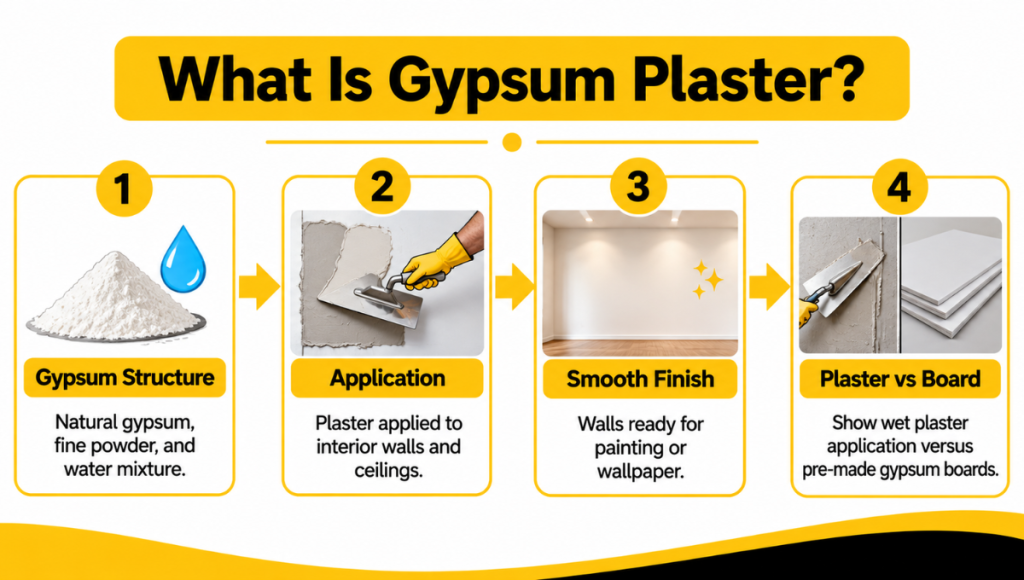
It is widely used in the plastering of walls and ceilings and as a base for painting or wallpapering. In contrast to the cement-based plaster, the gypsum plaster may often give a smooth finish without the need for an additional layer.
Gypsum plaster must not be mixed up with gypsum board work. It is mixed and applied as a liquid, whereas gypsum board is a pre-manufactured material used to create partitions and ceilings.
What are the Advantages of Gypsum Plaster?
It has many advantages, especially when working on interiors where aesthetics and fast application are the key considerations.
1. Creates a Smooth Wall Finish
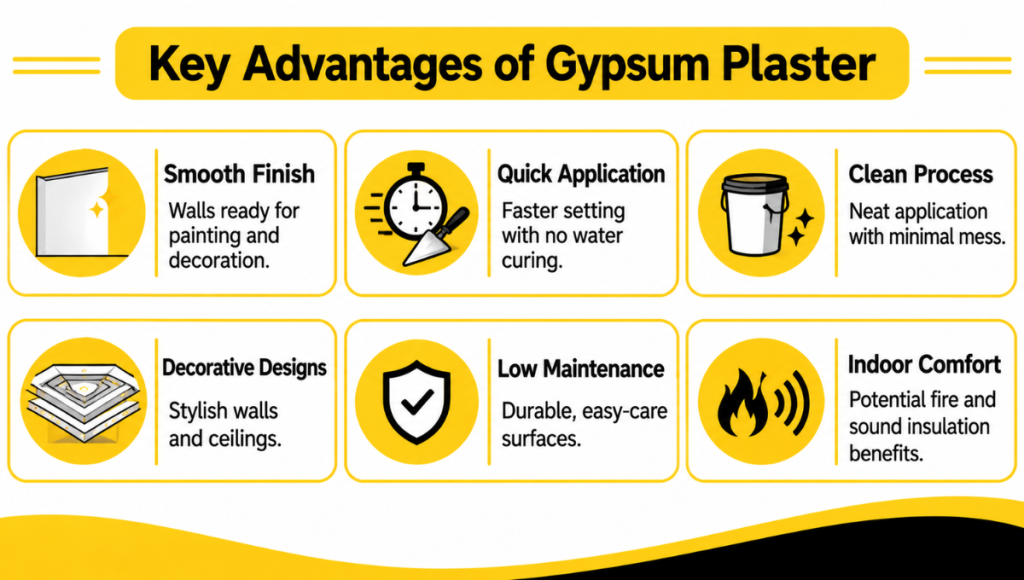
The smooth surface of gypsum is one of its main benefits because it hides all the minor defects on the surface and provides a good basis for wall decorations.
This is quite helpful for the living room, bedroom, office, or any other interior that requires a smooth surface. A well-prepared gypsum wall can also serve as a base for decorative painting and selected gypsum decoration.
2. Saves Time During Construction
It tends to set more rapidly than the usual cement plaster. Additionally, it does not need the water-curing process that is usually used in cement plaster.
Because of this, the next phase of interior finishing becomes easy for contractors to initiate. Nevertheless, the actual schedule may vary depending on the product used, thickness of application, room conditions, and how long it takes before painting.
3. Offers a Neat and Clean Application
Pre-mixed or pre-blended gypsum plaster materials may be used in order to eliminate the task of mixing on site. There is no requirement to prepare a mixture of sand and cement.
This would make handling the material much easier, and it would also minimize the disorder while plastering. But proper preparation, right mixing, and application are still important for success.
4. Provides a Good Base for Decoration
A gypsum-plaster surface is smooth and suitable for various interior finishes. It will then be ready to be painted or covered with appropriate wallpaper once it is completely dry.
This technique supports modern interior trends, and gypsum uses include creating smooth walls, decorative ceilings, and stylish designs that complement plain paint and decorative lighting. The final result depends on the quality of plastering and finishing.
5. Requires Less Maintenance
Using it properly ensures that you need minimal maintenance for its surface. You do not need to repaint or fix it often unless the wall cracks or moisture damages it. For small defects, you can use filling materials to improve the surface condition. You must establish the causes of damage before performing the repairs.
6. Improves Indoor Comfort
Gypsum-based products may help achieve certain building performance advantages, although it depends on the type of product and building system used. There are also gypsum plaster systems that provide fire-resistant and sound advantages.
The fire resistance or sound insulation, however, is dependent on the overall wall or ceiling construction, its thickness, and the material composition. Gypsum plaster alone should never be considered as an alternative for a tested fire-resistant or acoustical system.
What are the Disadvantages of Gypsum Plaster?
Even though there are many advantages to using it but it does not work for all surfaces. The application of this material depends on the level of moisture in the environment, among other factors.
1. Limited Resistance to Moisture
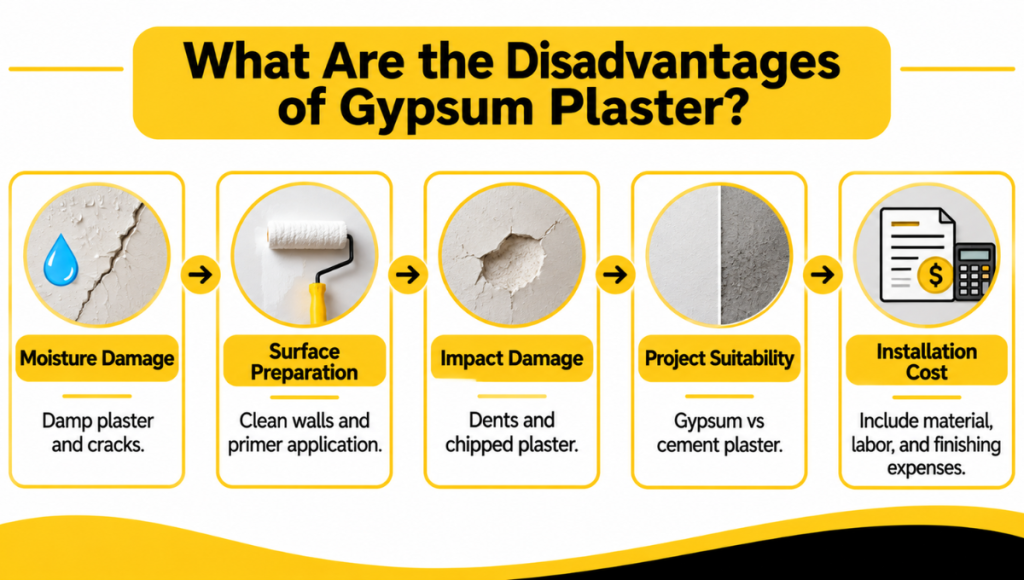
Gypsum plaster manufacturers normally intend it for use in interiors that have dry conditions. Exposure to wet or moist conditions may harm the plaster.
This is why experts do not advise using normal gypsum plaster on shower zones, constantly wet surfaces, and outside surfaces. However, manufacturers offer special water-resistant products, but you should choose them in accordance with their characteristics and purpose.
2. Requires Proper Surface Preparation
Gypsum plaster requires an appropriate base for proper plaster bonding. Factors such as dust, grease, waste, and poor or unstable base surfaces may influence attachment.
There are some cases where primers may also need to be used on the surface before plastering. This will help avoid problems like peeling, among others.
3. Can Be Damaged by Impact
Gypsum plaster is vulnerable to chipping, dents, and cracks under heavy impact. This could be a problem in places like busy corridors, commercial spaces, or where there is constant contact between the walls and furniture.
The actual duration will depend on the plaster being used, its thickness, the foundation, and craftsmanship. Places where there is frequent knocking might require a more appropriate protective coating or wall system.
4. May Not Be Suitable for Every Project
Gypsum plaster is not always the best choice just because it gives a smooth surface. For exterior walls and places that receive moisture on a regular basis, cement plaster is more suitable.
The wrong choice of materials will require repair and additional costs after that. Therefore, it is better to use the plaster that is more relevant for certain places and circumstances.
5. Material Cost Is Not the Only Expense
Gypsum plaster cost is more than just the cost of the material itself. Labor, surface preparation, primers, fixing costs, transportation, and finishing may influence the overall cost.
While gypsum plaster might help in saving some finishing work, it does not always become more economical than cement plaster. It is better to look at the cost of the total installation first.
Gypsum Plaster vs Cement Plaster: Which is Better?
These both are both suitable for plastering works. Gypsum plaster provides a smooth finish for dry interior surfaces. Cement plaster is suitable for exterior walls, while gypsum concrete is used in certain construction applications.
| Feature | Gypsum Plaster | Cement Plaster |
| Surface finish | Usually smooth | May need additional finishing |
| Setting time | Generally faster | Usually slower |
| Water resistance | Limited for standard products | Generally better |
| Exterior use | Usually unsuitable | Commonly used |
| Curing | Usually no cement-style water curing | Often requires proper curing |
| Best suited for | Dry interior walls and ceilings | Exterior walls and Moisture-exposed areas. |
The right material will depend on the surface, site, and product specifications. For instance, gypsum plaster will be ideal for use in a bedroom wall, whereas cement plaster will suit an exposed exterior wall. Both are necessarily superior to the other in every application.
What Factors Should You Consider Before Choosing Gypsum Plaster?
When planning for gypsum plastering, some of the aspects to take into consideration include the following:
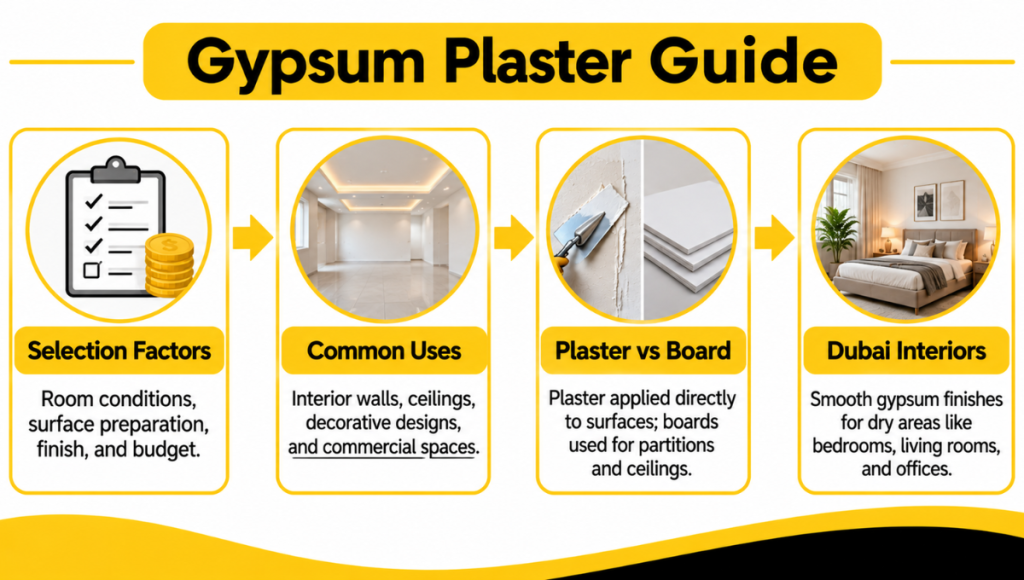
- Conditions of the room: Verify whether the wall is located in a dry interior area or a moist area.
- Surface preparation: Ensure that the surface is stable, clean, and appropriate for the plaster chosen.
- Smooth finish: Determine whether you require a smooth painted wall, a decorated finish, or a wall ready for wallpapering.
- Budget: Compare the cost of material, labor, preparation, and finishing instead of comparing only the cost of material.
- Specifications for products: Look at the manufacturer’s guidelines for usage, thickness, drying period, and applicable surfaces.
- Quality of work: Go for an expert plasterer who knows how to prepare the surface and apply the plaster.
The following inspections prove to be most helpful during renovation when there could be problems like moist areas, separated plaster, and irregularities in the wall surface.
What are the Common Uses of Gypsum Plaster?
People basically use gypsum plaster for interior decoration purposes. The smooth surface of gypsum plaster makes it ideal for various uses.
- Wall plastering inside: Provides a smooth surface for painting or wallpaper.
- Ceiling finishes: Helps in providing a good finish to appropriate interior ceilings.
- Decoration inside: Selected gypsum designs and decoration on walls.
- Repair and leveling: You can do it if you choose the appropriate product for the job.
- Commercial interiors: You can use it in offices, retail stores, and other dry interiors.
The gypsum plaster differs from the gypsum board. Workers fix the gypsum board to make partitions and a suspended ceiling, while they directly apply the gypsum plaster to the required surface. Both can be part of the same interior project, but each has its own function.
Is Gypsum Plaster Suitable for Homes in Dubai?
The use of it is a good option for the dry interiors of Dubai, such as bedrooms, living rooms, and offices. It gives a smooth surface and helps in quick finishing of interiors.
Nevertheless, humidity and surface condition are still important. Never apply regular gypsum plaster to wet walls or exterior surfaces unless the manufacturer specifically makes it for that purpose. High temperatures will also influence the process, so you must follow the manufacturer’s instructions.
When it comes to gypsum work in Dubai, you must take into account the room that you will treat, the type of walls that already exist, and the finish you want.
How AyeshTech Can Support Your Interior Project
A successful interior finish requires the use of the right materials, correct preparation, and workmanship. AyeshTech offers carpentry services, as well as interior design and decoration, in addition to other technical and fit-out services for residential and commercial properties.
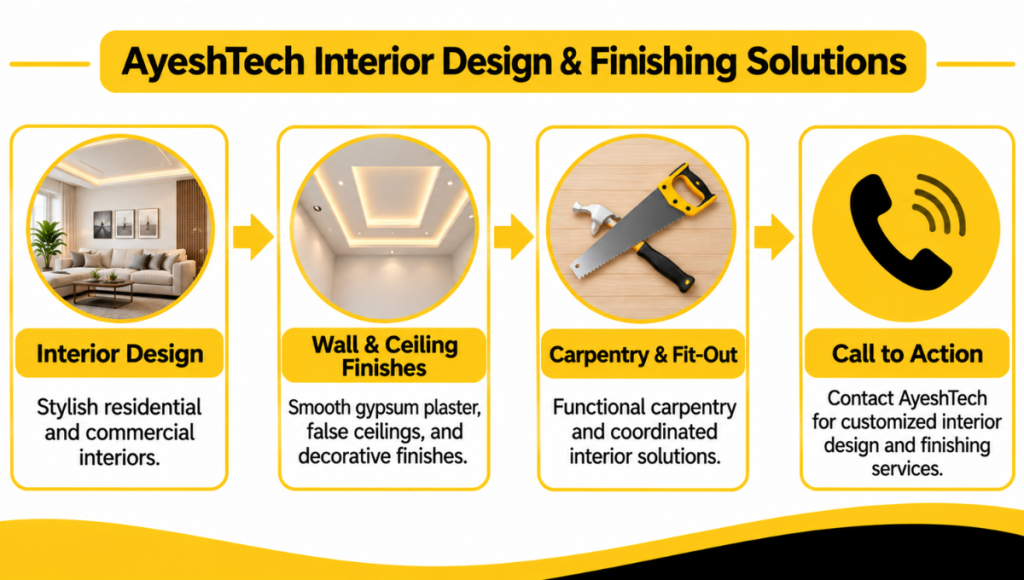
This includes interior planning and finishes that assist in bringing together various aspects of the interior space.
Interior Design and Finishing
When renovating your house, pick wall finishes that suit the lighting and colours of your room, along with its ceiling. These choices can help you create a balanced look and a more functional living space.
Related Interior Work
It is possible that gypsum plastering can form part of a broader project which includes partitioning, ceiling, decoration, painting, etc. Materials and techniques must be suitable for each particular zone instead of using the same solution across the property.
If you are thinking about renovating interiors, need some carpentry done, or need electrical/IT support, then making wise decisions by considering the available choices will help make things easy for you. You can visit our blog for practical tips and ideas on interior design, carpentry, electrical work, and other services for your home or business.
Conclusion
You can recommend gypsum plaster for dry interior walls and ceilings because it gives a smooth surface, sets up fast, and does not require much maintenance. Nevertheless, you should take into account its lack of moisture resistance, durability, and the need for surface preparation.
Before using gypsum plaster, check the place, existing surface, budget, and finishing that you desire. Moreover, you should also take into account the moisture levels inside the room and the condition of the wall for appropriate use of the plaster.
For a smooth, well-finished interior, AyeshTech offers interior design, false ceiling, and wall finishing solutions. Contact us to discuss your project requirements and find suitable options for your space.
FAQs
Is gypsum plaster better than cement plaster?
Gypsum plaster is ideal for use in interio r walls, while cement plaster is best for exterior walls and wet areas. It all depends on the moisture conditions and finish needed.
Can gypsum plaster be used in bathrooms?
Standard gypsum plaster should not be used on surfaces that are frequently subjected to water or moisture. A proper moisture-resistant plaster should be used in such cases.
Does gypsum plaster crack over time?
Gypsum plaster can crack when there is movement in the surface, when the base is not right, or when the mixing and application of the plaster is incorrect.
